Metal Loss in Jewelry Making: What It Is and How to Control It
How much metal disappears while melting, filing and polishing, how to measure your real loss by technique, and how to recover dust and filings so you stop giving gold away.
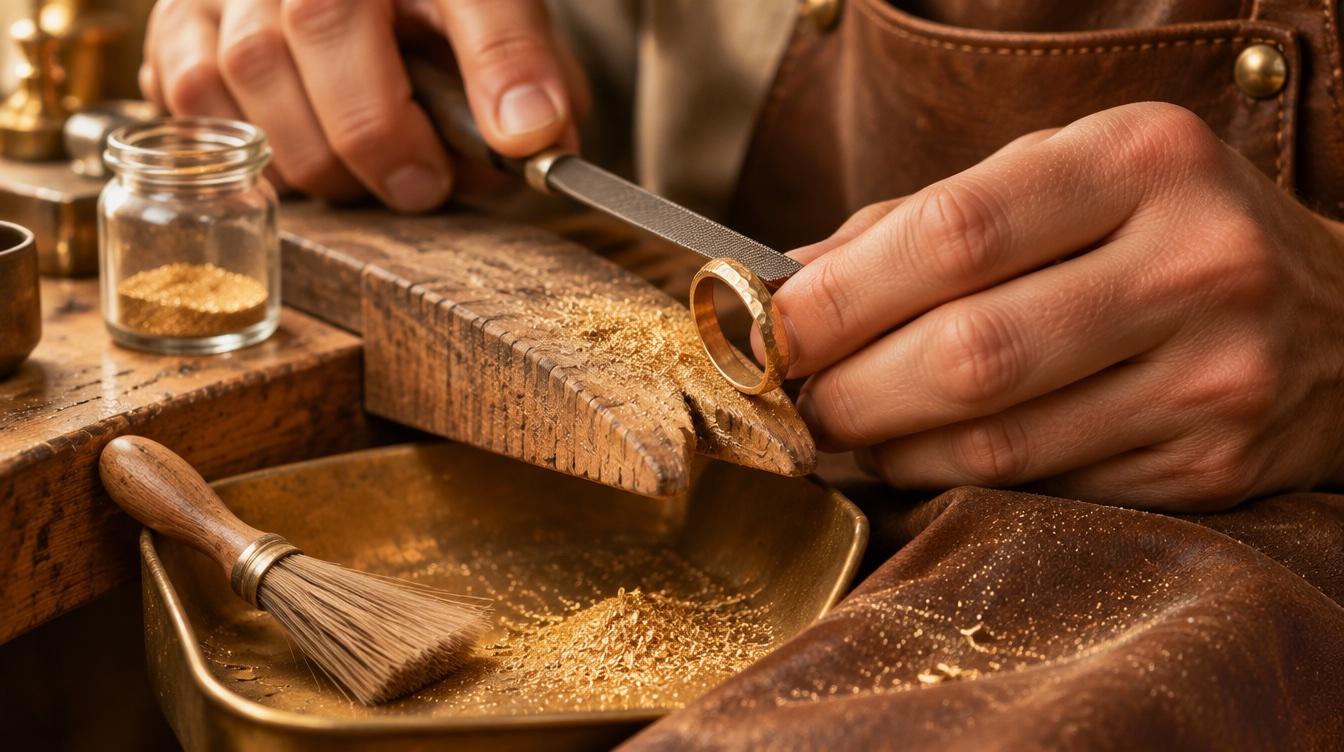
In a jewelry workshop, the gold never comes out whole. Some of it stays on the file, in the polishing dust, in the crucible or in the air. That is metal loss, and if you do not measure it, you pay for it.
Where the loss comes from
- Melting: some metal sticks to the crucible or oxidizes, and some is lost to spatter.
- Rolling and drawing: trimmings and ends that get thrown out.
- Filing and sanding: filings that fall on the bench or the floor.
- Polishing: dust that ends up in the wheels, the cloths and the air.
- Soldering and finishing: excess solder and metal removed during fitting.
Part of it can be recovered and part cannot. The gap between the two is your workshop's control.
Lost metal vs. recoverable metal
It helps to tell them apart:
- True loss: metal that vaporizes, oxidizes or leaves in residues not worth refining.
- Recoverable scrap: filings, polishing dust, trimmings and crucibles that you can collect and send to a refiner.
If you treat everything as loss, you underestimate your yield. If you recover nothing, you lose more than you need to.
How to measure your loss
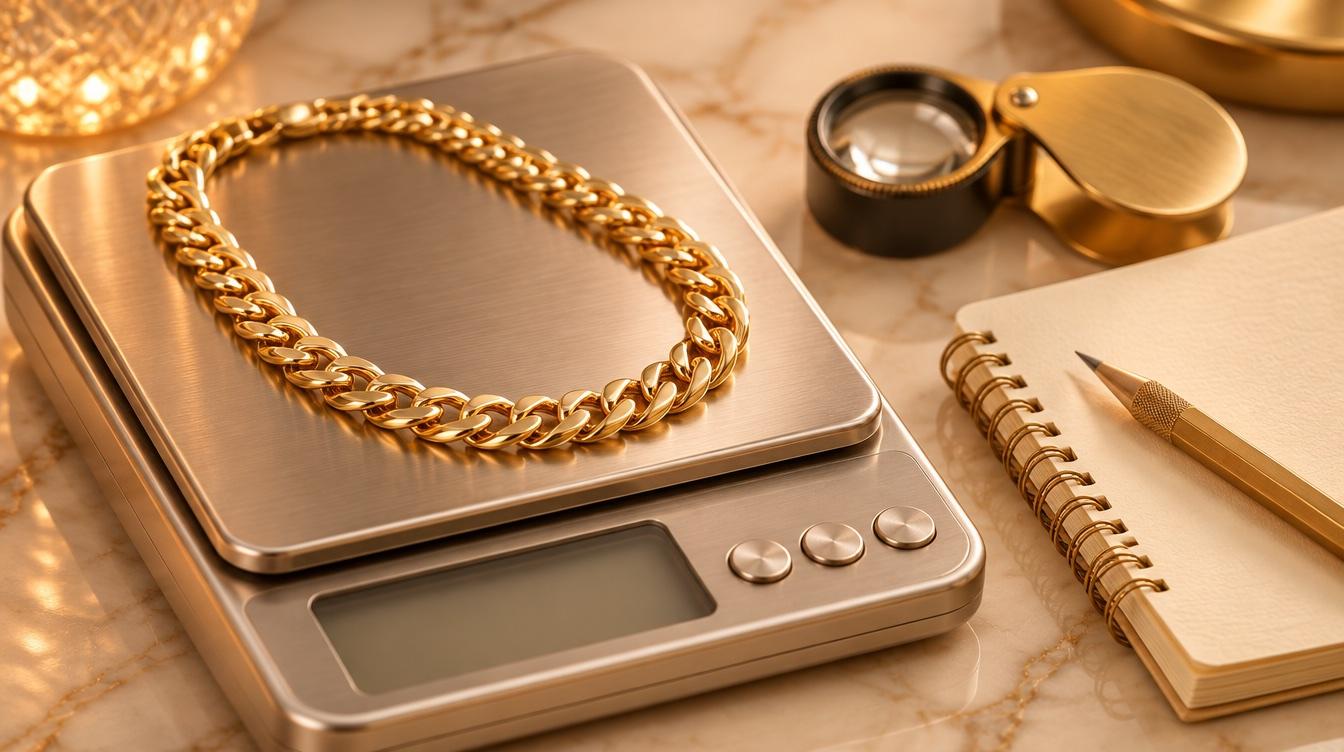
- Weigh the metal before each job, on a scale accurate to at least hundredths of a gram.
- Weigh the finished piece together with the clean leftover scrap you can reuse.
- Work out the difference: starting weight − (piece weight + reusable metal).
- Turn it into a percentage: loss ÷ starting weight × 100.
- Repeat across several pieces made with the same technique and take the average. One measurement is not reliable.
The metal loss calculator can help you record and compare results.
An example
A job starts with 20.00 g of gold. The finished piece weighs 18.60 g and 0.90 g of clean trimmings remain.
- Loss: 20.00 − (18.60 + 0.90) = 0.50 g
- Loss rate: 0.50 ÷ 20.00 = 2.5%
If gold costs $2,000 per gram (an illustrative figure), that loss is $1,000 on a single job.
How to reduce it
- Work over an apron or tray that catches filings. Sweep up everything, not just what you can see.
- Separate scrap by purity. Mixing 10k with 18k complicates refining and your accounting. See more in our gold scrap mixing calculator.
- Use extraction and filters in the polishing area and check the dust that builds up.
- Reuse ends and trimmings as material for small melts.
- Keep a log for each job with who did it, which technique was used and how much was lost. Patterns will show.
What to do with recovered material
Keep filings, dust and crucibles apart by purity and take them to a refiner. Record the weight you hand over and the weight returned or credited, because the refiner charges a percentage for the process.
How to charge for loss fairly
If you work with the customer's gold, agree the accepted loss percentage in writing before you start. If you make pieces from your own metal, build it into the cost, as explained in how to price a gold jewelry piece.
Frequently asked questions
What is a normal loss rate? It depends on the technique and the workshop. That is why you should measure your own instead of copying someone else's number.
Is loss billed to the customer? If you work with the customer's metal, it is agreed in advance. If the metal is yours, it is part of the product cost.
How often should I refine? When you have gathered enough to justify the cost of the process. Track it by batch so you do not lose traceability.