Gold Karats Explained: 10k vs 14k vs 18k vs 24k
What karats mean, how much pure gold each purity holds, and how to choose what to sell based on durability, price and customer.
Karats measure how pure the metal is, not its weight or size. Knowing the scale well helps you quote with confidence, explain price differences and avoid mistakes when you buy used gold.
What a karat is
Pure gold is 24 karats. One karat is one twenty-fourth of the alloy: an 18k piece is 18 parts gold and 6 parts other metals, such as copper, silver or palladium.
Those other metals are not a trick. Pure gold is very soft, and alloying makes it harder, more wear-resistant and gives it its color.
Purity table
| Karats | Pure gold | Usual hallmark |
|---|---|---|
| 10k | 41.7% | 417 |
| 14k | 58.5% | 585 |
| 18k | 75% | 750 |
| 22k | 91.6% | 916 |
| 24k | 99.9% | 999 |
To find the pure gold in a piece, multiply its weight by the purity. A 10 g chain in 14k holds 5.85 g of pure gold. With that number you can work out its value using the gold price per karat tool.
The differences in practice
10k. The most affordable and the most resistant to daily wear. It has less gold, so the color is a little less intense. Good for rugged use and price-driven customers.
14k. The best-selling middle ground in many stores: good hardness, a clearly golden color and a reasonable price.
18k. More gold and a warmer color, common in fine jewelry and engagement rings. It is softer than 14k, so it scratches more easily.
22k and 24k. Deep yellow, but soft. More often used for bars, coins and investment, and in traditional jewelry in some cultures. They deform easily in daily wear.
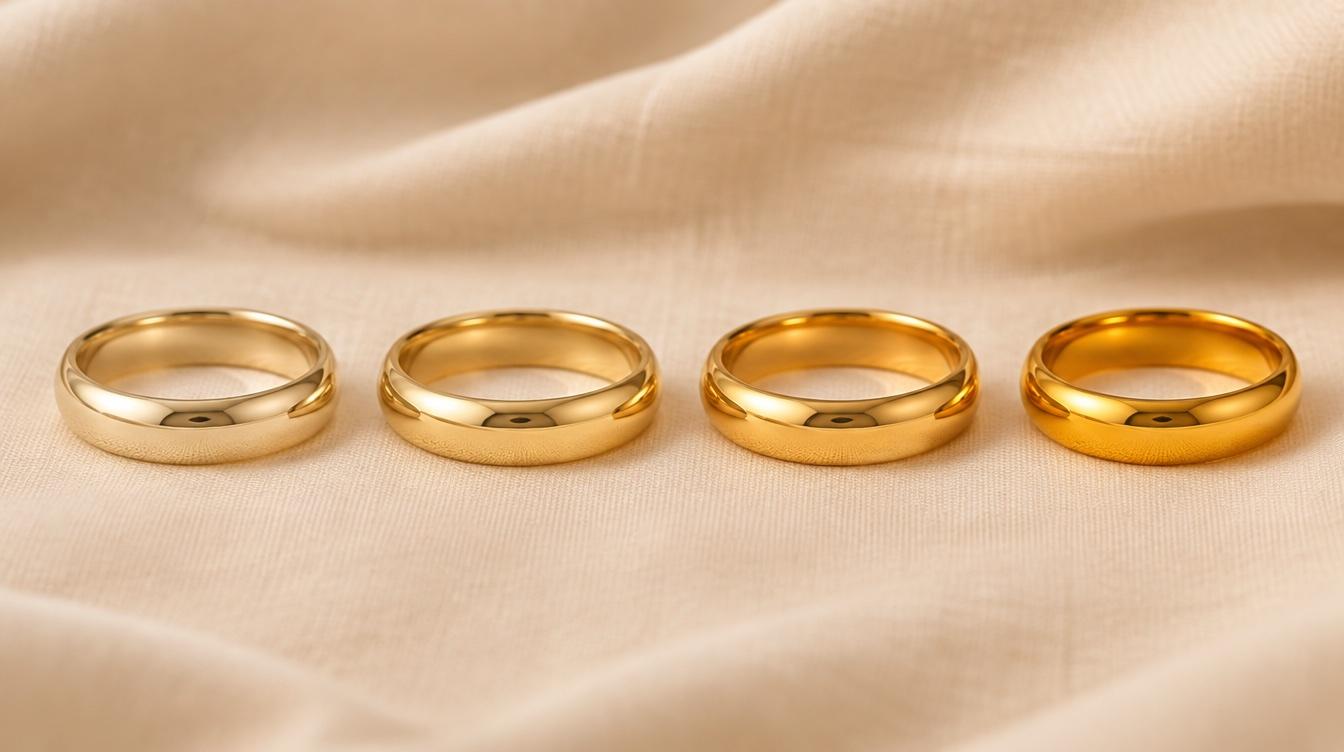
Color changes too
The tone depends on the metals in the alloy:
- Yellow gold: gold with silver and copper.
- Rose gold: more copper.
- White gold: gold with white metals such as palladium or, in some alloys, nickel. Many pieces also get a rhodium plating that wears off and should be renewed.
If a customer is allergic to nickel, confirm the alloy before selling white gold.
What should you sell?
No purity is simply "best". It depends on your customer:
- Frequent purchases and daily wear: 10k or 14k.
- Special pieces and gifts: 14k and 18k.
- Saving or investment: 24k bars or coins.
Carrying all three at the counter lets you serve different budgets without cutting your margin. See how to set it in our article on jewelry profit margin.
How to verify karats
- Read the hallmark, usually inside the piece or near the clasp.
- Use an acid test or an electronic tester to rule out plated pieces. These tests check the surface.
- For high-value purchases, use X-ray fluorescence (XRF) or fire assay. These are the reliable methods when a piece may be filled or plated.
Never accept a purity on the label alone when you buy used gold. More in how to buy scrap gold without losing money.
What the standard says
In Mexico, the commercial information and test methods for gold, silver, platinum and palladium articles are governed by NOM-033/1-SE-2020, which replaced NOM-033-SCFI-1994. Read the current text to see how you must mark and describe what you sell.
Frequently asked questions
Is 10k gold real gold? Yes. It is an alloy with 41.7% gold, and it should be described that way to the customer.
Are diamond carats the same? No. For diamonds, the carat (spelled with a "c") measures weight (0.2 g), not purity.