How to Price a Gold Jewelry Piece, Step by Step
The formula for pricing a gold piece: weight, karat, price per gram, metal loss, labor and margin. Includes a worked example in pesos.
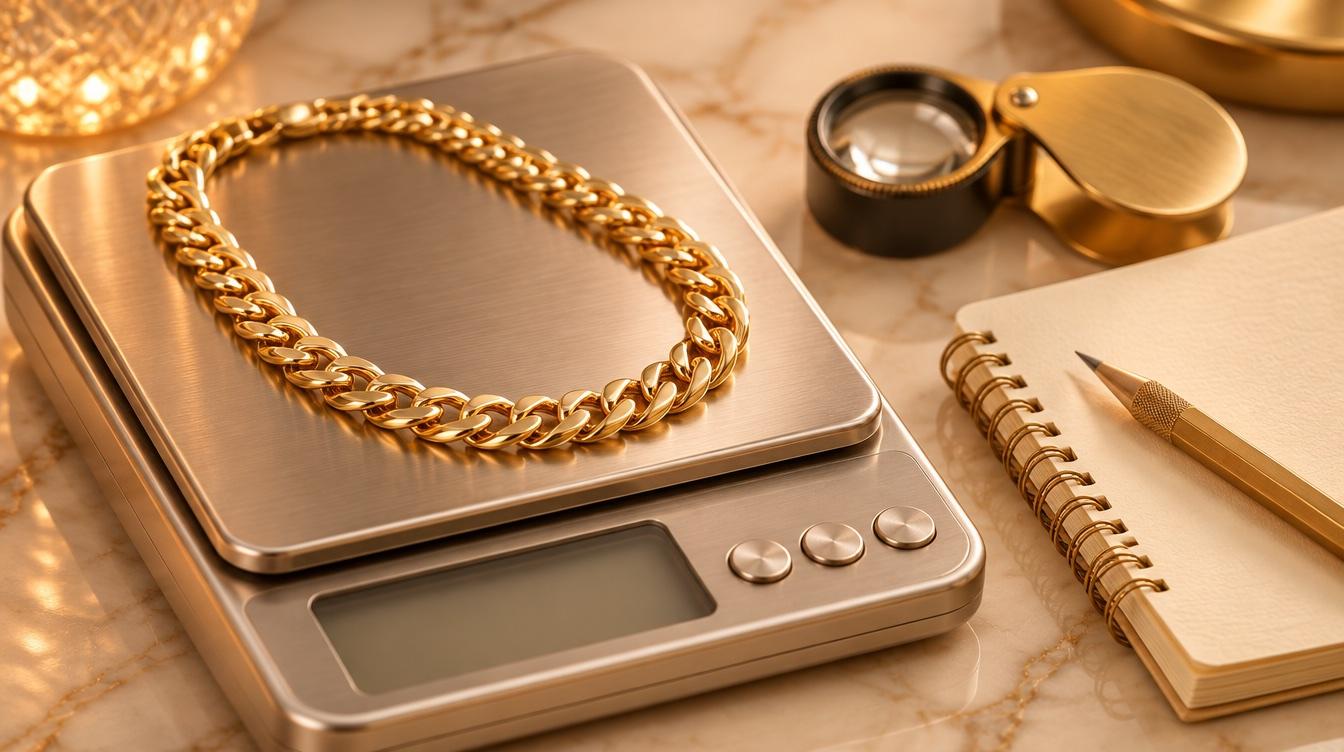
Pricing a gold piece looks easy until gold moves in the middle of the week and the piece you quoted on Monday no longer earns you anything. The fix is to split the price into parts and recalculate each one when it changes.
The basic formula
The selling price of a gold piece has five components:
- Metal value: piece weight × purity × price per gram of pure gold.
- Metal loss: the metal that disappears while melting, filing and polishing.
- Labor: the cost of making it or, if you buy it finished, your supplier's markup over the metal.
- Stones and other materials, if any.
- Profit margin on the total cost.
If one is missing, your price is a guess.
Step 1: work out how much pure gold is in the piece
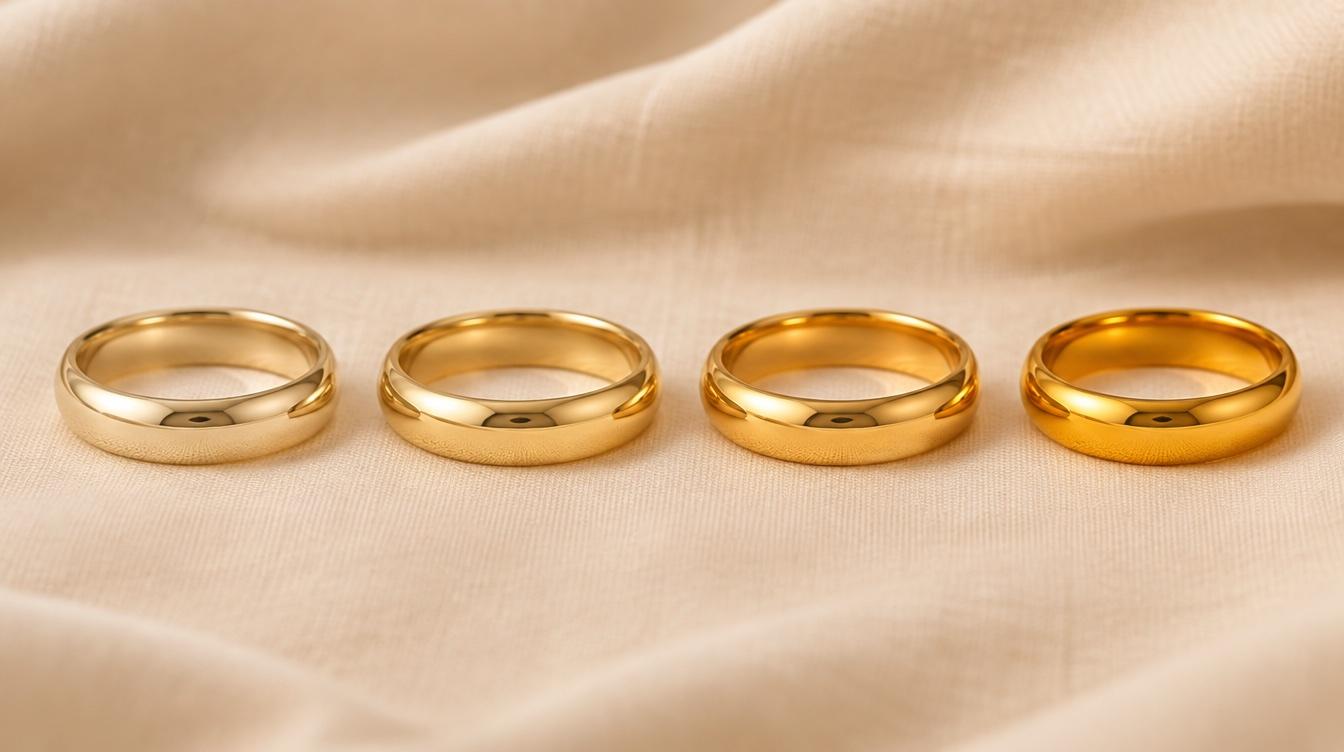
Karats express purity in twenty-fourths. A 14-karat piece has 14 parts gold out of 24, which the trade treats as 58.5%. Multiply the weight by that purity:
- A 5 g piece in 14k: 5 × 0.585 = 2.925 g of pure gold.
The most common purities are 10k (41.7%), 14k (58.5%), 18k (75%) and 24k (99.9%). For a refresher on the differences, read our guide to gold karats.
Step 2: multiply by the price per gram
Look up today's gold price, convert it to pesos and express it per gram. The live quote is on the gold price page, and broken down by purity in the gold price per karat tool.
For the example, assume $2,000 MXN per gram of pure gold. That is not today's price; it is a round number so the math is easy to follow.
- Metal value: 2.925 g × $2,000 = $5,850.
Step 3: add metal loss
Working metal always costs you a little. Every workshop has its own percentage and it changes with the technique, so the right figure is the one you measure yourself. With a loss of 3% of the metal value:
- Metal loss: $5,850 × 0.03 = $175.50.
There is more on how to measure it in our article on metal loss in the workshop.
Step 4: add labor and materials
If you make the piece, add the working hours and supplies. If you buy it finished, add what your supplier charges above the metal. With $600 of labor:
- Total cost: $5,850 + $175.50 + $600 = $6,625.50.
Step 5: apply your margin
This is where many people slip: margin and markup are not the same thing.
| Method | Calculation | Selling price |
|---|---|---|
| 40% markup on cost | $6,625.50 × 1.40 | $9,275.70 |
| 40% margin on price | $6,625.50 ÷ (1 − 0.40) | $11,042.50 |
A 40% markup leaves you a margin of only 28.6% of the sale. If you want to keep 40% of the final price, use the second formula. Try your own numbers in the cost and margin calculator.
How to keep prices from going stale
- Separate metal from labor on your price list. Metal moves every day; labor almost never does.
- Decide how often you update the price per gram and who does it. Once a day is usually enough.
- Store the weight and purity of every piece in your inventory so you can recalculate instead of quoting from memory.
- Avoid fixed price tags on heavy gold pieces. They hurt the most when the metal rises.
A gold valuation system does this calculation for you with the day's price and updates it when the price moves.
Frequently asked questions
Do you charge by the gram or by the piece? Plain, heavy pieces (chains, bracelets) are usually sold by the gram plus labor. Designs, stone-set pieces and light items usually have a per-piece price.
Should VAT be part of the calculation? The shelf price normally includes it. Calculate your margin on the price before VAT and ask your accountant how to invoice.
What if the customer brings their own gold? You charge only labor and credit the metal they hand over, adjusted for purity. Record the agreed weight and purity before starting the job.